A practical guide to choosing a robe
A Closer Look at Coyuchi Bathrobes: Cotton Weaves, Weight, and Fit
The right bathrobe can make an ordinary morning feel a little more considered. With cotton robes, the details that matter most are often the ones you notice in use: how the weave feels against damp skin, how much warmth the fabric holds, and whether the cut gives you room to move.
Published November 8, 2026
A robe has a simple job, but it can serve several different moments in a day. It might be the first layer pulled on after a shower, a comfortable cover-up during a slow breakfast, or an easy extra layer on a cool evening. That variety makes it worth looking beyond color and style. Cotton weave, fabric weight, coverage, and practical construction all shape how a robe feels and functions.
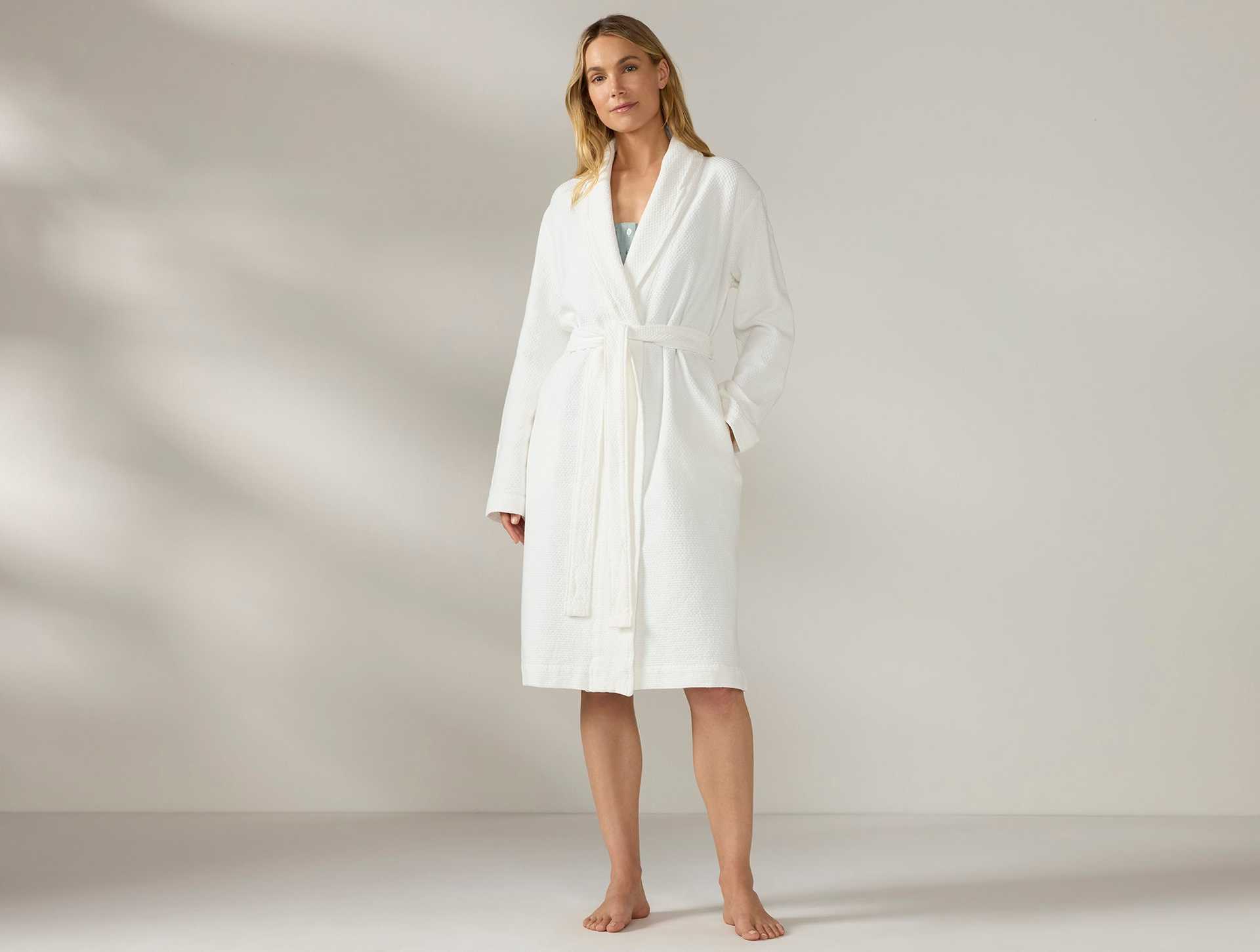
Coyuchi bathrobes offer a useful starting point for thinking through those choices. The brand’s Women’s Adriatic Organic Robe is described as a lightweight robe made from organic cotton, with a relaxed weave, garment-dyed texture, a slightly tapered waist, a tie belt, and on-seam pockets. Those features suggest a particular balance: an easy, breathable feel with a more shaped silhouette than a completely straight, oversized wrap.
That is different from the appeal of a waffle weave. Waffle robes use a raised, grid-like texture that creates an airy surface and a distinct handfeel. The two approaches aren’t simply better or worse than one another. They offer different sensations, coverage, and daily-use advantages. Understanding those differences can help you choose a cotton bathrobe that suits your routine rather than relying on a size label or product name alone.
Why cotton weave changes the experience
“Cotton robe” describes a material, not a single feel. The way cotton yarns are woven affects the fabric’s surface, drape, airflow, and how substantial it seems. A relaxed, relatively open weave can feel light and supple, while a textured waffle construction feels more dimensional beneath the hand. Neither texture tells the whole story about performance: details such as fabric weight, yarn, finishing, and garment construction matter, too.
A lightweight cotton robe is often a natural choice for people who don’t want a bulky layer. It can be comfortable over sleepwear or loungewear and may feel less cumbersome in a warm room. A relaxed weave can also allow the garment to drape softly rather than standing away from the body. For someone who wears a robe mainly during a quiet morning or while getting ready, that easy movement can be more important than plush thickness.
Waffle cotton has a different character. Its small raised squares and recessed channels give the fabric a textured, recognizable appearance. That structure can make a robe feel breathable and less dense than a thick, uniform fabric, while still providing a tactile layer. The robe’s overall warmth and absorbency will depend on more than the pattern, so it is wise to consider the product’s stated material, weight, construction, and care guidance rather than treating “waffle” as a guarantee of a particular level of performance.
For post-shower use, consider how much contact with wet skin you expect. Some robes are designed to be more absorbent than others, but a robe is not automatically a substitute for a towel. A light cotton layer may be especially pleasant once you have towel-dried, while a textured fabric may appeal if you want a more substantial-feeling wrap without choosing a very heavy garment. Personal preference and the room’s temperature both play a role.
Lightweight and relaxed: the Adriatic approach
The Women’s Adriatic Organic Robe is made from 100% organic cotton and has a lightweight, relaxed weave. Garment dyeing gives the fabric a soft, textured feel and can create variations in color from piece to piece. That variation is part of the garment’s described finish, not a sizing feature, and it means the exact appearance may differ slightly across individual robes.
Its women’s fit is described as having a slightly tapered waist. That can give the robe a more defined outline than a straight-cut wrap, while the waist belt allows the wearer to adjust how closely it sits. The belt is fitted through dog-eared loops, and on-seam pockets provide a place for small essentials. Those details are practical, but they also influence how the robe behaves: a tie can help keep the front closed, and pockets add useful function without a separate attached patch-pocket shape.
The robe’s combination of light weight and a shaped waist may suit someone looking for a layer that feels relaxed without being entirely unstructured. Still, “slightly tapered” should not be read as a promise of a close fit. A wrap robe is adjustable by design, and the final coverage depends on the wearer’s measurements, chosen size, and how the belt is tied. Check the current size chart and garment measurements before deciding, especially if you prefer more room through the shoulders, hips, or sleeves.
For product details, see the Women’s Adriatic Organic Robe. It is listed with cold, gentle machine washing using like colors and tumble drying on low, with instructions to remove it promptly. The care label remains the final guide for an individual garment.
What a waffle weave brings to a robe
Waffle weave is often chosen for its distinctive surface and airy feel. Rather than a smooth, flat face, the fabric has a repeating textured pattern. That gives the robe a more tactile look and can create a comfortable middle ground for people who want something lighter than a thick terry layer but more textured than a plain, smooth cotton wrap.
In a robe, the pattern is only one part of the fit and feel. A waffle garment may be cut generously or narrowly; it may have long or shorter sleeves, roomy pockets, and different belt placements. The texture itself cannot tell you how much coverage the robe provides or whether its sleeves will feel comfortable when you reach forward. Look at the listed measurements and design details, and think about how you plan to wear it.
Waffle fabric also deserves a little attention after washing. Textured cotton can respond to laundering differently from a smooth, tightly woven fabric, and cotton may change in size or feel depending on the garment’s construction and care. Follow the product-specific instructions rather than assuming all cotton robes can be treated identically. If a care label advises washing before first wear or notes that a small amount of shrinkage is natural, factor that into your fit expectations.
For a compact, warm-weather routine, a light waffle robe may feel appealing because it is textured without necessarily being bulky. For someone who prizes a soft drape and a more understated surface, a relaxed cotton weave may feel like the better match. These are preferences to test against the actual garment specifications, not fixed rules about which weave is cooler or more absorbent.
Weight, warmth, and absorbency: what to look for
Fabric weight is useful context, but it does not function as a complete comfort score. A heavier fabric may feel more substantial and provide a cozier layer, while a lighter one may feel easier to wear in a warm climate or throughout a busy morning. Yet weave, cut, and finishing can change how a robe feels in practice. Two cotton garments with similar weights can still drape differently or feel unlike one another on the skin.
When a product listing provides a fabric weight, use it as one comparison point. If it does not, avoid guessing from photographs or assuming that a particular weave must be heavy or light. Read the construction description and care instructions, and consider whether you want a robe for brief post-bath coverage, lounging over pajamas, or layering over everyday clothes. A robe intended for one of those routines may not be ideal for all of them.
Absorbency is similarly influenced by the fabric’s construction, surface, and condition. A cotton robe can feel pleasant after a shower, but its purpose and performance vary. If you want a robe primarily to absorb water, pay close attention to the product’s specific claims and fabric description. If you mainly want a breathable layer after towel-drying, a lightweight cotton option may meet that need more comfortably.
Warmth is personal, too. Someone in a cool bedroom may prefer a fuller layer, while a warm home or humid climate can make a lighter robe more appealing. Sleeve length, robe length, and how securely the front overlaps all affect the sense of coverage. The best choice is the one that feels appropriate for the room and routine you actually have—not an imagined ideal morning.
Fit starts with measurements, not just a size letter
Robe sizing can be less straightforward than choosing a fitted top because many robes wrap across the body and close with a belt. A size label offers a starting point, but garment measurements and the desired amount of overlap are more informative. Before ordering, compare your measurements with the current size chart and check whether the listing gives chest, body, sleeve, or length measurements.
- Consider the wrap: Think about how much front coverage you want when the robe is tied. If you prefer generous overlap, choose a size and cut that provide room through the body.
- Check shoulder and sleeve comfort: A robe should allow ordinary movement, including reaching and bending. Review shoulder and sleeve measurements where available.
- Decide how you will layer: A robe worn over sleepwear may need less ease than one worn over thicker pajamas or clothing.
- Review the length: Compare the garment length with your preference for knee, mid-calf, or fuller coverage, if a measurement is provided.
- Allow for care-related changes: Cotton may shrink to some degree. Follow the maker’s instructions and read any stated fit or shrinkage guidance before selecting a size.
A belt makes a robe adjustable, but it cannot change the garment’s shoulder width, sleeve length, or overall length. Nor can it compensate for a robe that does not provide enough fabric to close comfortably. If you are between sizes, the right decision depends on how you like a wrap to sit and on the garment-specific size guidance. Avoid relying on a generic rule such as always sizing up: different robe patterns and measurements can lead to different results.
Small details that make daily wear easier
Pockets are easy to overlook until you use them. On-seam pockets, like those described for the Adriatic robe, keep small essentials close while maintaining a relatively integrated look. Consider whether you want somewhere to place a phone, a hair tie, or other lightweight items, and remember that pockets are best used for objects that won’t pull awkwardly on a soft garment.
The belt and its loops matter for convenience as well as fit. A securely placed belt is easier to adjust and less likely to become separated from the robe during ordinary use. When trying a robe on, tie it at the height that feels natural and walk, sit, and reach. Notice whether the front stays comfortably closed and whether the belt feels easy to manage.
Surface and color are part of the choice, too. The Adriatic robe’s garment-dyed finish is described as creating subtle variations from piece to piece. That gives the fabric a distinctive, lived-in quality, though shoppers who expect perfectly uniform color may want to keep that characteristic in mind. The weave, finish, and shade together create the overall impression; no single detail tells the whole story.
Caring for cotton so it stays comfortable
Thoughtful care can help a cotton robe remain comfortable and wearable. The specific instructions matter more than broad advice, because different fabrics and finishes may call for different treatment. For the Adriatic robe, the listed guidance is to machine wash cold on a gentle cycle with like colors, tumble dry low, and remove promptly. A warm iron is optional if desired.
Before washing, check the garment’s care label and close or secure any belt or fastenings as appropriate. Washing with similar colors can help reduce unwanted color transfer, while a gentle cycle limits rough handling. Avoid substituting a more aggressive wash or hotter dryer setting unless the maker’s instructions allow it. Excess heat can affect cotton garments and may contribute to changes in fit or texture.
Drying can influence how a robe feels after laundering. The product instructions specify low tumble drying and prompt removal; following those directions is a sensible way to help avoid leaving the fabric creased in the dryer. If you are particularly attentive to the fit, compare the robe’s measurements and label guidance before the first wash, and handle any stated shrinkage expectations accordingly.
Waffle textures and relaxed weaves may not behave identically in the laundry, so don’t assume that care instructions for one robe apply to another. The care label is the most useful guide for the individual garment. With cotton, regular gentle care is often a more reliable strategy than trying to restore a fabric after overly hot washing or drying.
How to choose between a relaxed weave and waffle
Start with the moment you want the robe to improve. If you picture slipping into a light layer after towel-drying or wearing it while making coffee, focus on the robe’s stated weight, drape, and coverage. The Adriatic’s lightweight, relaxed weave and adjustable belt make it a relevant option to consider if you prefer cotton with an easy feel and a slightly shaped waist.
If the tactile surface is part of the appeal, a waffle robe may be more your style. Compare its fabric description and measurements, and pay attention to any instructions about washing or natural shrinkage. The word “waffle” describes texture; it does not, by itself, tell you how warm, thick, or generously cut a particular robe will be.
It can help to make a short checklist before shopping: desired robe length, room temperature, preferred amount of overlap, whether pockets matter, and how much room you want for sleepwear underneath. Then compare those priorities with the product’s documented details. This keeps the decision grounded in how the robe will be worn rather than in broad claims about what every cotton robe should feel like.
The takeaway
Cotton robes are not one-size-fits-all in feel, even when they share the same basic fiber. A relaxed weave can offer a light, soft drape; waffle construction brings a more pronounced texture and its own distinctive character. Fabric weight, cut, belt placement, pockets, and care instructions all help complete the picture.
Coyuchi’s Women’s Adriatic Organic Robe brings several of those considerations together in a clear way: 100% organic cotton, a lightweight relaxed weave, garment-dyed texture, a slightly tapered women’s fit, an adjustable waist belt, and on-seam pockets. For anyone weighing it against a waffle-style robe, the useful question is not which category wins. It is which combination of texture, coverage, and everyday practicality suits your home, climate, and routine.
Take a moment to check the measurements, plan for the way you will layer, and follow the care directions. Those small decisions can turn a robe from a nice-looking extra into a comfortable part of the day.